

Last Updated: November 10, 2026
Quick Summary
Professional mailing supplies are the materials a business keeps on hand to prepare, protect, and send correspondence and parcels reliably. A complete kit covers five jobs: the envelope or outer container, the cushioning inside it, the closure, the addressing, and the record. Stock deliberately rather than reordering in a panic.
- Business envelopes divide into correspondence, window, and booklet or catalog categories, each solving a different problem.
- The 10 Regular Envelope fits an 8-1/2" x 11" sheet folded in thirds for letters, invoices, and statements.
- Fill every gap so nothing moves when you shake the box, then add one more layer on contact faces.
- Calculate reorder points by multiplying weekly usage by lead time in weeks, then adding a buffer.
- Weigh items before printing postage to avoid the most common cause of reprints and surcharges.
Table of Contents
- Building a Professional Mailing Supplies Kit
- Types of Business Envelopes and Their Uses
- Mailing Boxes, Mailers and Cushioning Materials
- Tape, Labels and the Small Supplies That Slow You Down
- Custom Printed Envelopes for Business: When Branding Pays Off
- Best Practices for Professional Business Mailings
- Choosing Supplies by Shipment Type, Weight and Fragility
- Ordering Your Core Envelope Stock
- Frequently Asked Questions
Building a Professional Mailing Supplies Kit
Professional mailing supplies are the materials a business keeps on hand to prepare, protect, and send correspondence and parcels reliably. For the envelope portion specifically, this guide on how to choose professional business envelopes covers sizes, types, window options, and custom printing.
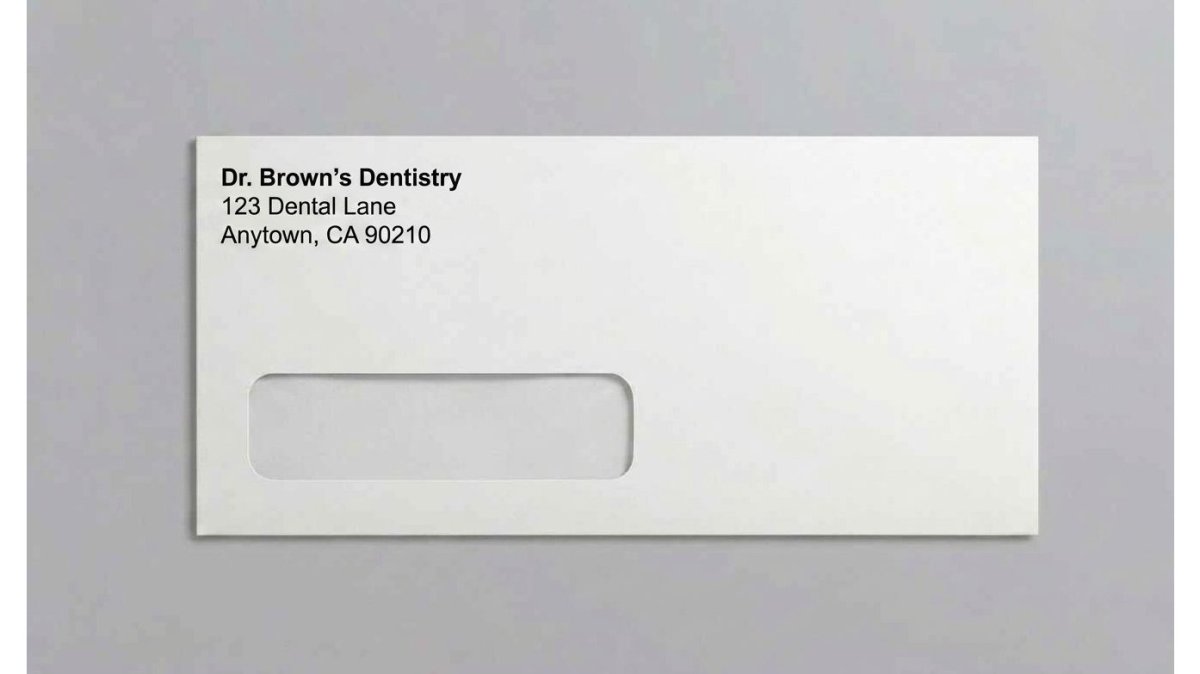
A complete kit covers five jobs: the envelope or outer container, the cushioning inside it, the closure, the addressing, and the record. Getting those five right makes daily correspondence simpler to manage.

Here is the distinction most guides skip: mailing supplies you consume versus mailing supplies you maintain. Envelopes, tape, and labels get used up; a scale, tape dispenser, and folding tool do not.
Types of Business Envelopes and Their Uses
Business envelopes divide into three working categories: correspondence envelopes for folded letters, window envelopes for statements and invoices, and booklet or catalog envelopes for flat documents. Each type solves a different problem, and mixing them up wastes money or looks unprofessional.
The #10 Regular Envelope is the standard for business correspondence. At 4-1/8" x 9-1/2", it fits an 8-1/2" x 11" sheet folded in thirds, covering letters, invoices, statements, checks, and everyday office mail. The #10 Window Envelope uses the same dimensions but adds a clear left-positioned poly window, so the recipient's address prints directly on the document inside, eliminating separate labels and speeding up high-volume billing.
The #9 Regular Envelope, at 3-7/8" x 8-7/8", is built to fit inside a standard #10. That makes it the natural choice for reply envelopes, remittance mail, and return envelopes bundled into a billing package.
Envelope Sizes That Cover Most Office Mail
For most offices, four sizes handle nearly everything:
| Envelope | Size | Best For |
|---|---|---|
| #10 Regular | 4-1/8" x 9-1/2" | Letters, invoices, statements |
| #10 Window | 4-1/8" x 9-1/2" | Billing, payroll, automated mail |
| #9 Regular | 3-7/8" x 8-7/8" | Reply and remittance envelopes |
| 6 x 9 Booklet | 6" x 9" | Catalogs, reports, flat documents |
If you stock only two, make them the #10 Regular and the #10 Window. If you run billing campaigns, add the #9 for reply mail. Browse the full range of business envelopes to compare styles and pack sizes before you commit to a quantity.
Mailing Boxes, Mailers and Cushioning Materials
Boxes and mailers protect what envelopes cannot. Choose the outer container first, then match the cushioning to the fragility of the contents.
Cushioning is where most offices overspend or underspend. Bubble wrap and foam protect against impact; packing paper and tissue fill void space so contents do not shift.
For flat documents like catalogs, brochures, or multi-page proposals, a booklet envelope often beats a box. The booklet envelope guide explains sizes and uses in detail if you regularly send material that must arrive unfolded.
Tape, Labels and the Small Supplies That Slow You Down
The supplies that cause the most delay are rarely the expensive ones. Tape, labels, and forms are cheap individually and disruptive when they run out mid-batch. A tape dispenser on the bench, a spare roll within reach, and a printed label sheet loaded before you start save more time than any other mailroom change.
The harder question for a professional operation is how to keep those small supplies from becoming a recurring bottleneck. That is an inventory problem, not a shopping problem.
The Consumable vs. Durable Split
Separate your small supplies into two ledgers. Consumables are used up per piece: tape, labels, ink, forms, and void fill. Durables are bought once and maintained: tape dispensers, scales, folding tools, label printers, and benches.
Durables often fail silently. A dispenser that no longer cuts cleanly, a scale that drifts, or a folding tool with a worn edge slows every piece without appearing on a reorder list.
Setting Reorder Points for Consumables
Forecasting small supplies comes down to three numbers: average weekly usage, supplier lead time, and a buffer sized to your busiest week. Multiply weekly usage by lead time in weeks, then add the buffer. That is your reorder point, and it should be written down rather than remembered.
For example, if a station uses two rolls of packing tape a week and lead time is one week, the reorder point is two rolls plus a buffer. If a busy month doubles usage, the buffer must cover that, not the average. The same formula applies to label sheets, carrier forms, and void fill.
Watch out: reorder points set against average rather than peak usage are the most common cause of mid-batch stockouts. Size the buffer to the busiest month.
Standardizing Supplies Across Stations
Every additional tape width, label size, or form type is another item to forecast and another way to run out. Standardize on the smallest set that covers your mail: one tape width for sealing, one label size for addressing, and one form type per carrier. That reduces both inventory complexity and training time.
A Standing Minimum Checklist
Stock these as a standing minimum at each packing station:
- Packing tape plus one spare roll per station
- A weighted tape dispenser that cuts one-handed
- Shipping labels and address label sheets in a single standard size
Watch out: printing postage before weighing is the single most common cause of reprints and surcharges. Weigh first, then print.
When to Move from Reorder Points to a Supply Calendar
Once you mail at volume, reorder points alone become reactive. A supply calendar, a simple monthly schedule listing what gets checked, what gets ordered, and who owns it, turns replenishment into a routine. A shared sheet with columns for item, reorder point, current count, and owner is enough for most small and mid-sized operations.
Custom Printed Envelopes for Business: When Branding Pays Off
Custom printed envelopes for business pay off when the envelope is part of the message, not just the container. For event planners sending invitations, marketing teams running direct mail, and home-based professionals sending client invoices, a printed envelope signals that the contents were prepared deliberately.
Generic envelopes cost less per unit; branded envelopes carry your identity to every recipient. The comparison is not really about unit cost; it is about whether the mailing is transactional or promotional.
Our guidance: brand the envelopes your customers open repeatedly, such as invoices and statements, and keep plain stock for internal or low-stakes mail. If you are weighing the trade-off, this comparison of branded business stationery vs generic envelopes lays out professionalism, cost, and results side by side.
Best Practices for Professional Business Mailings
Professional business mailings follow a repeatable sequence: verify the address, right-size the container, protect the contents, seal and label correctly, and record what went out.
A few practices matter more than the rest. Right-size packaging so contents do not shift in transit. Keep a folding tool at each station so letter folds stay consistent.
For organizations sending at volume, the discipline shifts from individual pieces to campaign planning. A structured bulk mail strategy for small business covers planning, preparation, budgeting, and tracking in more depth than a single mailing requires.
Choosing Supplies by Shipment Type, Weight and Fragility
Match the supply to the shipment, not to habit. Flat, flexible documents belong in envelopes. Semi-rigid items belong in padded mailers. Fragile or heavy items belong in corrugated boxes with void fill.
The useful version is a decision sequence you can apply piece by piece, because the interaction between weight, fragility, and carrier rules is where most packaging mistakes happen.
A Decision Sequence for Any Shipment
Work through four questions in order before you reach for a container:
- Is the item flat and flexible? If yes, an envelope or flat mailer is usually correct. If it must arrive unbent, move to a rigid mailer.
- Is it semi-rigid or lightly protected? Padded mailers suit documents, small parts, and accessories that can tolerate some handling.
- Is it fragile or heavy? Corrugated boxes with void fill on all faces are the default. Heavier items need stronger board and more cushioning.
- Does the carrier impose packaging or labeling rules? Check before you standardize, not after a delay.
This sequence matters because the wrong first decision cascades. A fragile item packed in a padded mailer will fail no matter how much cushioning you add, and a flat document packed in an oversized box wastes void fill and postage.
How Weight Changes the Calculation
Weight affects three things at once: the board strength you need, the cushioning required, and the cost to send. Heavier items need stronger corrugated board and more cushioning, and they cost more to ship, so right-sizing directly reduces postage.
Dimensional weight is the mechanism most offices overlook. Carriers bill on the greater of actual weight or dimensional weight, which is calculated from the package's length, width, and height.
How Fragility Changes the Calculation
Fragility determines cushioning placement, not just quantity. A glass item needs cushioning on all six faces and enough void fill that nothing shifts when the box is shaken.
A practical rule most practitioners use: fill every gap so nothing moves when you shake the box, then add one more layer on the faces that contact the container.
Carrier Requirements as a Constraint
Carrier requirements are the constraint most offices overlook. Carriers publish packaging and labeling standards, and non-compliant parcels get delayed or surcharged.
Check current requirements for the carriers you use before standardizing a packaging method, and revisit them when you change carriers or ship new product types.
Watch out: standardizing a packaging method before checking carrier rules is the most common cause of avoidable surcharges.
Turning the Framework into a Written Standard
The final step is to write the decision sequence down as a one-page standard for your mailroom: the container types you stock, the cushioning that goes with each, and the carrier rules that apply. A written standard makes the framework repeatable across staff and shifts, and survives turnover.
Ordering Your Core Envelope Stock
Ordering well comes down to three numbers: your average weekly usage, your lead time, and a buffer. Multiply weekly usage by lead time, then add a buffer sized to your busiest month. That is your reorder point, and it should be written down rather than remembered.
Order core stock in the pack size that matches your operation. Keep a small reserve of each size so a single busy week never leaves you without the envelope you need most.
The challenge most offices face is not finding mailing supplies; it is stocking the right ones in the right quantities without overbuying.
Frequently Asked Questions
What are the essential mailing supplies every small business needs?
Start with a core envelope stock: #10 Regular Envelopes for letters, invoices and statements, plus #10 Window Envelopes if you send billing that already carries the address. Add #9 Regular Envelopes as reply envelopes for remittances, and 6 x 9 Booklet Envelopes for anything that must go flat. That set covers most daily correspondence without overbuying.
What is the difference between standard and professional-grade mailing envelopes?
Standard envelopes are chosen on size and price alone. Professional-grade stock is chosen for how it looks and performs in the mail. The difference shows up on the receiving end, where a flimsy envelope reads as careless and a crisp one reads as intentional. For recurring client correspondence, that consistency matters more than the per-unit difference.
How do you choose the right size envelope for professional correspondence?
Work backwards from the document. A standard 8-1/2 x 11 sheet folded in thirds fits a #10 envelope, which is why it handles letters, invoices and statements. If the piece must stay flat, such as a brochure or proposal, use a 6 x 9 Booklet Envelope that opens on the long edge. For reply mail, a #9 Regular Envelope nests inside a #10 so the recipient can return payment or a response card without hunting for an envelope.
How do professional mailing supplies impact brand perception?
Mail is often the only physical object a client holds from your business, and it arrives before anyone reads a word. A clean envelope with a clear window and a properly aligned address signals an organised operation; a creased, oversized or hand-addressed one signals the opposite. Custom printed envelopes for business take this further by putting your name and mark on every piece of correspondence, so invoices and announcements reinforce the brand instead of looking generic.
